
How to Build a Successful Food Brand From a Domain Name
By Gallant Business Solutions (Gallbiz) · Published 2 February 2026 · Updated 18 February 2026 · 9 min read
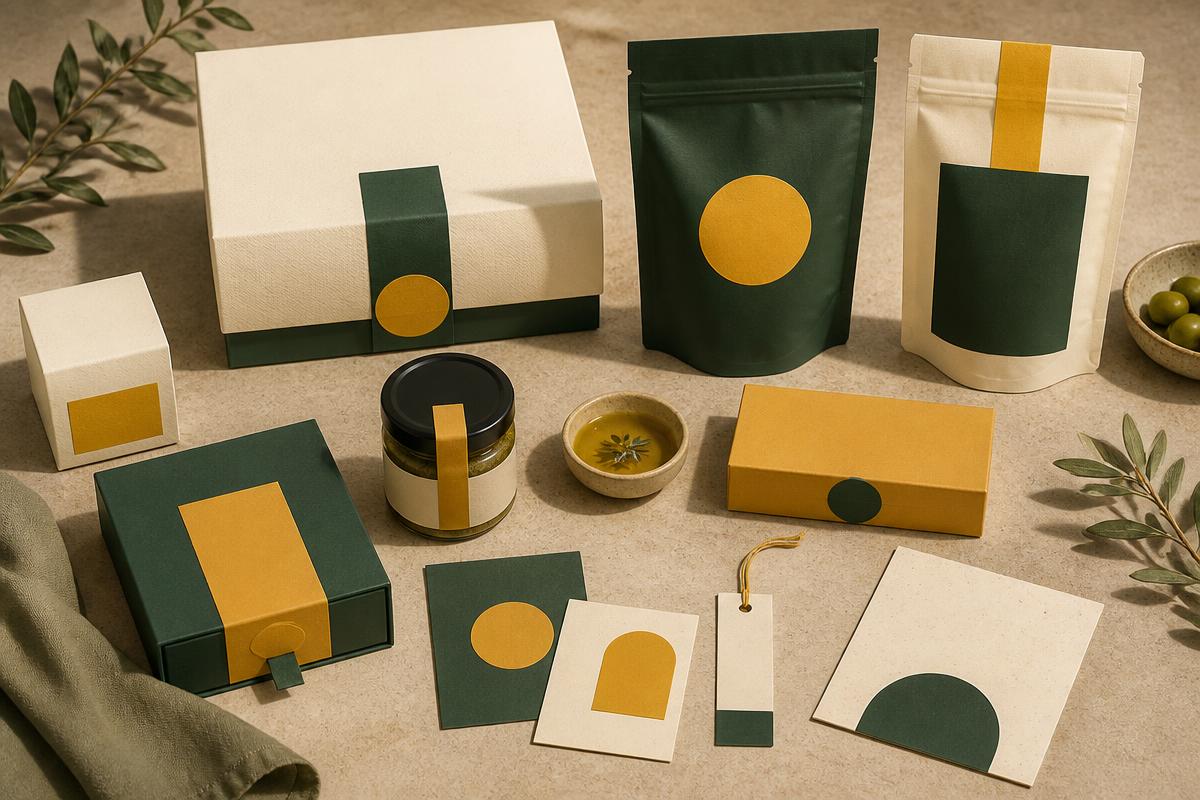
Owning a good name is the easiest part. What turns it into a brand is a sequence of decisions made in the right order, each one narrowing the next. Below is that sequence, using KushiFoods.com as an illustrative example throughout. Nothing here guarantees commercial success — that depends on your product, market and execution.
Step 1 — Positioning before aesthetics
Write one paragraph answering: who is this for, what do they buy today instead, what do we do differently, and why should they believe it. Until that paragraph is specific, every design choice is guesswork.
Be concrete. 'Everyday snacks for office workers who want something less processed than a chocolate bar' can be designed for. 'Great food for everyone' cannot.
Step 2 — Brand identity
Identity translates positioning into something recognisable: personality, tone of voice, and the visual system. Decide early whether the brand is warm and homely, sharp and modern, or premium and restrained — and keep every later decision inside that choice.
Step 3 — Logo
A food logo needs to work at 16 pixels as a favicon and at a metre wide on a shopfront. Aim for a simple mark plus a clean wordmark, delivered in vector format with a single-colour version for foil, embossing and stamping.
Avoid intricate illustration inside the primary mark; it disappears at small sizes and prints badly on textured stock.
Step 4 — Colour system
Pick one primary colour, one accent and a small neutral range, then define them for both screen and print. Check contrast for accessibility, and check how the palette behaves under supermarket lighting and in phone photographs — food colours shift more than brand teams expect.
Step 5 — Packaging
Packaging is where the brand meets reality: materials, print method, shelf life, regulatory labelling and cost per unit all constrain design.
- Front of pack: brand, product, variant, and one clear reason to pick it up.
- Back of pack: ingredients, allergens, nutrition, weight, storage, dates and contact — per local law.
- Structure: does it survive shipping, stacking and repeated opening?
- Family logic: can a second and third product join the range without a redesign?
Step 6 — Website
Your site should load fast on a mid-range phone, state what you sell above the fold, and make buying or enquiring obvious. Add the trust infrastructure customers look for: clear shipping and returns policies, real contact details, and honest product information.
Step 7 — Product photography
Photography does more selling than copy in food. Shoot the product as it actually looks, in consistent light, on a consistent surface, from a consistent angle. Include scale references and in-use shots. Inconsistent photography makes a small range look like three unrelated brands.
Step 8 — Social media
Choose one or two platforms where your customers already are rather than posting thinly everywhere. Match handles to the domain, keep the visual language consistent with packaging, and post at a cadence you can sustain for a year.
Step 9 — Content marketing
Useful content — recipes, storage guidance, sourcing stories, buying advice — earns attention that advertising has to rent. It also gives search engines something substantive to index. Publish fewer, better pieces rather than volume for its own sake.
Step 10 — Customer experience
In food, experience is the brand: order accuracy, delivery condition, how a damaged item is handled, how fast you reply. Set response-time expectations you can keep, and treat complaints as product research.
Step 11 — Advertising
Advertise only after the product, packaging and fulfilment are stable, or you will pay to accelerate a bad first impression. Start small, measure contribution margin rather than vanity reach, and expect to iterate creative more often than targeting.
Step 12 — Consistency
Consistency compounds. The same name, mark, palette, tone and address repeated across pack, site, social, invoice and delivery box is what converts recognition into preference. Write a short brand guide — even two pages — so that consistency survives new staff, new agencies and new products.
A memorable domain such as KushiFoods.com can anchor that system, but it is the foundation, not the building. The work above is what makes it worth something.
Premium domain for sale
KushiFoods.com is available for acquisition
A short, food-relevant .com that could anchor a product line, restaurant group or online store. Price available on enquiry.