
12 Food Business Ideas You Can Build Around a Strong Brand
By Gallant Business Solutions (Gallbiz) · Published 20 January 2026 · Updated 10 February 2026 · 10 min read
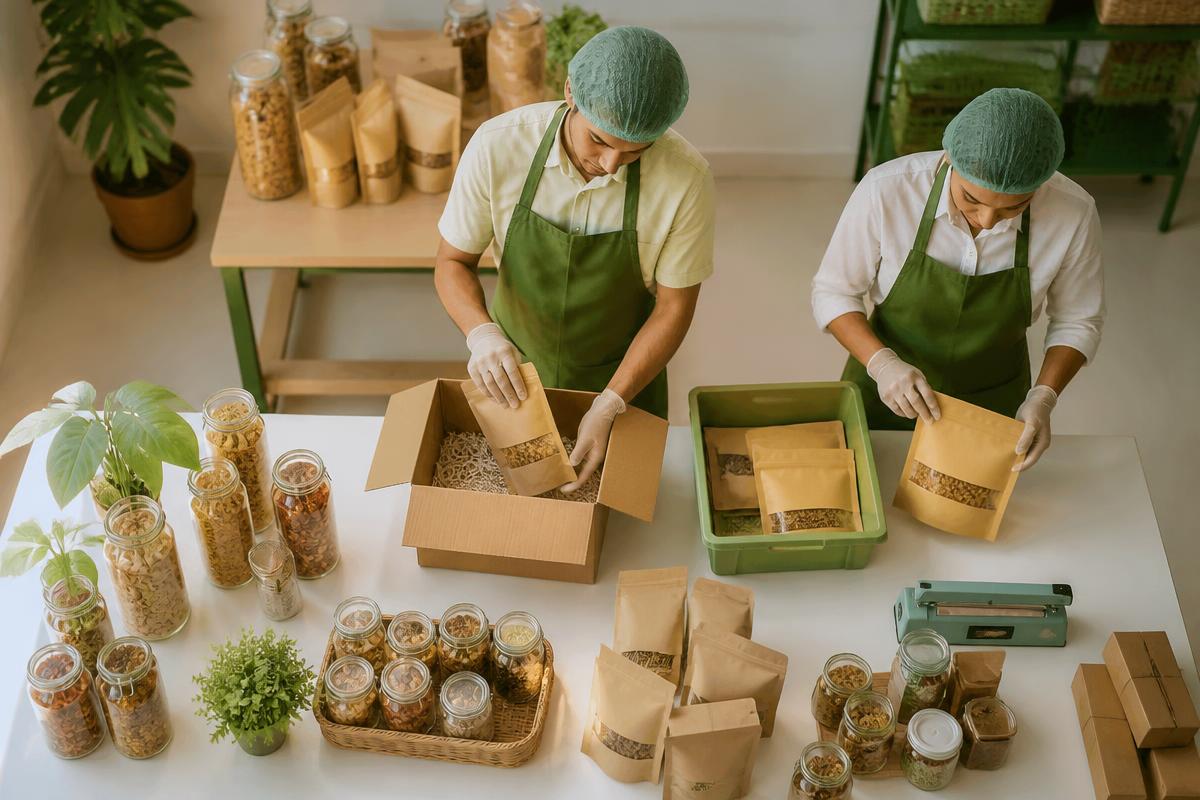
Food is unusually accessible as a starting category and unusually unforgiving as an operating one. Margins are thin, perishability is real, and compliance is not optional. What follows is a practical look at twelve models, including where a strong brand does the most work. These are illustrative business concepts, not businesses operating under this domain.
1. Packaged food brand
You develop a recipe, work with a manufacturer or your own small facility, and sell a shelf-stable product under your name. Expect real costs in food-safety licensing, nutritional analysis, label compliance, packaging tooling and minimum order quantities.
Branding matters more here than in almost any other model, because the pack is the only salesperson. Start with a small number of SKUs and prove repeat purchase before widening the range.
2. Snack business
Snacks are impulse-driven, repeat-friendly and well suited to sampling. They also sit in a crowded aisle, so a distinctive name and pack are decisive. Watch shelf life and breakage in transit — both quietly destroy margins on light, bulky products.
3. Restaurant
The highest-capital model on this list, and the most operationally demanding: rent, fit-out, staffing, equipment, licensing and daily wastage. In return you get direct customer relationships and pricing power that packaged goods rarely match. Keep the initial menu short; every additional dish adds inventory, prep time and waste.
4. Cloud kitchen
A delivery-first kitchen with no dining room. Lower fit-out cost, but platform commissions, packaging cost and delivery-condition quality become the core problems. Test how your food travels for thirty minutes before you launch it; texture, not taste, is what usually fails.
Because customers meet you inside a marketplace app, brand recognition is what pulls them back to order directly next time.
5. Catering
Project-based revenue with strong margins on volume, but lumpy cash flow and heavy dependence on reputation and referral. Build clear per-head pricing, written contracts, deposit terms and a realistic staffing plan for peak season.
6. Food e-commerce
Selling specialty foods direct to customers online. The product is only half the job; the other half is shipping. Model packaging, courier cost and damage rate before setting prices, and be honest about which items simply cannot ship well.
A memorable web address genuinely helps here, because customers type it, share it and remember it. That is the practical argument behind brandable domains such as KushiFoods.com.
7. Organic and natural foods
A trust-led segment. Certification requirements, supplier traceability and claim substantiation are the real work. Only make claims you can evidence — regulators and customers both check, and a withdrawn claim costs more than it ever earned.
8. Frozen foods
Long shelf life and reduced waste, offset by cold-chain cost and complexity. Freezer space at retail is scarce and expensive, so many frozen brands start with direct delivery in a tight geography before pursuing distribution.
9. Food gifting
Curated hampers and gourmet boxes carry high perceived value and strong seasonal peaks. Presentation is the product. Plan inventory and labour around those peaks carefully, and develop a corporate gifting channel to smooth the rest of the year.
10. Subscription boxes
Recurring revenue is attractive, but churn decides everything. Track cohort retention from month one, keep enough variety that month four still feels fresh, and make pausing easy — forced continuity generates refunds and complaints, not loyalty.
11. Specialty foods
Regional, artisanal or heritage products sold to a defined audience. Smaller market, higher willingness to pay, and storytelling that has to be authentic and verifiable. Sourcing consistency is usually the binding constraint.
12. Food content platform
Recipes, reviews, education or video. Revenue comes from advertising, sponsorship, digital products or eventually your own product line. It is a slow-compounding asset that depends on genuinely useful original content and consistent publishing.
How to choose between them
- Capital available and how long it must last before revenue.
- Whether your advantage is recipe, sourcing, service or distribution.
- Perishability and logistics you are actually equipped to handle.
- Licensing and compliance load in your territory.
- How much of the model depends on you personally being present.
- Whether the concept can extend into a second product line later.
Whichever model you pick, the brand layer — name, identity, packaging and web address — is the part that carries across categories if the business evolves. That is why it is worth settling early.
Premium domain for sale
KushiFoods.com is available for acquisition
A short, food-relevant .com that could anchor a product line, restaurant group or online store. Price available on enquiry.